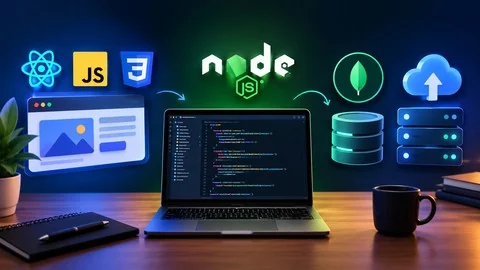
Learn full stack web development in Kenya at DAZU Training Institute. Master coding, databases and build real-world websites and applications.
https://master.dev/courses/fullstack-v3/
Full Stack Web Development Course in Kenya: Learn to Build Websites and Applications
Have you ever visited a website, used an online shopping platform or paid for something through an application and wondered how it was built?
Behind every modern website and web application is a team of developers who understand how technology works.
Today, businesses across Kenya are moving online. Schools need student management systems, hospitals need digital patient management platforms, supermarkets need inventory systems, and entrepreneurs need websites and e-commerce platforms to reach more customers.
Who builds these systems?
Web developers and software engineers.
The demand for digital solutions is creating opportunities for young people interested in technology, programming and software development.
If you are a student, graduate, job seeker or someone interested in starting a technology career, learning full stack web development can be an excellent starting point.
A full stack web development course in Kenya introduces you to both frontend and backend programming, database management, application development and the technologies used to build modern digital platforms.
At DAZU Training Institute, our focus is to help learners develop practical technology skills and understand how to transform programming knowledge into functional software solutions.
You do not have to be a professional programmer to begin. You can start with the basics and gradually learn how to build complete websites and applications.
What Is Full Stack Web Development?
Full stack web development is the process of developing both the frontend and backend of a website or web application.
There are two major parts:
1. Frontend Development
Frontend development involves everything users see and interact with when visiting a website.
For example:
Website layouts and navigation.
Login and registration forms.
Buttons and interactive elements.
Images, colours and typography.
Mobile-friendly website designs.
User dashboards and interfaces.
Technologies include:
HTML5 – Structures website content.
CSS3 – Controls website appearance and layouts.
JavaScript – Makes websites interactive.
React.js – Helps developers build modern user interfaces.
Tailwind CSS – Speeds up responsive interface development.
2. Backend Development
Backend development handles the operations that happen behind the scenes.
For example:
User registration and authentication.
Saving information in databases.
Processing transactions.
Managing inventory.
Connecting applications through APIs.
Handling business logic and security.
Technologies include:
PHP.
Python.
Node.js.
Django.
Laravel.
MySQL.
PostgreSQL.
MongoDB.
A full stack developer understands how these technologies work together to create complete applications.
Why Should Young People Learn Full Stack Web Development in Kenya?
Technology is becoming part of almost every industry. Learning software development gives young people an opportunity to participate in building the digital solutions that businesses and organisations need.
Here are six reasons to consider learning full stack development.
1. Develop a Valuable Technology Skill
Programming is a practical skill that allows you to create solutions rather than simply use existing applications.
Instead of only knowing how to use a website, you can learn how to develop one.
2. Build Websites for Businesses
Thousands of businesses require websites and digital platforms to operate efficiently.
You can learn to develop:
Business websites.
E-commerce platforms.
School management systems.
Hotel reservation systems.
Hospital management applications.
Point-of-sale systems.
Online booking platforms.
These are examples of practical solutions you can develop as your skills improve.
3. Explore Freelancing Opportunities
Full stack development can allow you to offer website and application development services to clients.
You can build a portfolio, approach local businesses and explore international freelancing platforms.
Potential clients include:
Retail businesses.
Restaurants and hotels.
Schools and training institutions.
Real estate agencies.
Small and medium-sized enterprises.
Startups and entrepreneurs.
4. Access Local and International Career Opportunities
Software development skills can prepare you to pursue opportunities such as frontend developer, backend developer, full stack developer and software engineer.
You can also explore remote opportunities depending on your experience, portfolio and technical competence.
5. Start Your Own Technology Business
One of the exciting advantages of learning programming is that you can build your own digital products.
For example, you could develop:
A school management platform.
An online marketplace.
A business inventory system.
A restaurant ordering application.
A subscription-based software product (SaaS).
You can start with a simple idea, develop it and gradually improve it into a functional product.
6. Prepare for Emerging Technologies
Full stack development provides a foundation for progressing into other areas, including artificial intelligence integration, cloud computing, cybersecurity and software engineering.
What Will You Learn in a Full Stack Web Development Course?
To become a competent developer, you need to understand how different technologies work together.
Here is a practical learning roadmap.
Module 1: HTML5 – Building Website Structures
HTML is the foundation of web development.
You will learn:
HTML document structure.
Headings and paragraphs.
Images and hyperlinks.
Tables and lists.
Forms and input fields.
Semantic HTML.
Website navigation.
Practical project: Build your first personal website introducing yourself, your interests and your skills.
Module 2: CSS3 and Responsive Web Design
Learn how to transform basic HTML pages into professional-looking websites.
Topics include:
CSS selectors.
Colours and typography.
Margins and padding.
Flexbox.
CSS Grid.
Responsive layouts.
Mobile-first design.
Bootstrap or Tailwind CSS.
Practical project: Design a responsive business website that works on computers, tablets and smartphones.
Module 3: JavaScript Programming
JavaScript makes websites interactive and dynamic.
Learn:
Variables and data types.
Functions.
Conditional statements.
Loops.
Arrays and objects.
DOM manipulation.
Event handling.
Fetch API.
Asynchronous programming.
Practical project: Build an interactive calculator, registration form or task management application.
Module 4: Frontend Development with React
After understanding HTML, CSS and JavaScript, you can progress to modern frontend development.
Learn:
React fundamentals.
Components.
Props and state.
React hooks.
Forms and validation.
API integration.
Routing.
Building reusable interfaces.
Practical project: Create a student dashboard or e-commerce frontend.
Module 5: Backend Programming
Learn how websites process information, communicate with databases and handle user requests.
Depending on your selected technology stack, explore:
PHP and Laravel
PHP fundamentals.
Variables and functions.
Object-oriented programming.
Database connections.
Laravel fundamentals.
Authentication and application development.
Python and Django
Python fundamentals.
Object-oriented programming.
Django project structure.
Models and views.
User authentication.
API development.
JavaScript and Node.js
Node.js fundamentals.
Express.js.
Server-side programming.
API development.
Authentication.
Backend application structure.
Practical project: Develop a backend system that manages users, records and business information.
Module 6: Database Management
Every data-driven application requires a way to store and retrieve information.
Learn:
Database fundamentals.
SQL.
MySQL.
PostgreSQL.
Database relationships.
CRUD operations.
Database design.
Data validation.
Practical project: Create a database for a school, business or inventory management application.
Module 7: APIs and Third-Party Integrations
Modern applications communicate with other software platforms.
Learn:
Understanding APIs.
REST API fundamentals.
HTTP requests and responses.
JSON data.
API authentication.
Webhooks.
Connecting frontend and backend systems.
You can also explore practical integrations such as:
M-Pesa Daraja API.
Africa's Talking SMS API.
Email notification services.
Cloud storage services.
Practical project: Develop an online ordering system with an M-Pesa sandbox payment integration.
Module 8: Git, GitHub and Deployment
Learn how professional developers manage and publish their projects.
Topics include:
Git fundamentals.
Creating GitHub repositories.
Version control.
Branching and collaboration.
Hosting websites.
Deployment using platforms such as Vercel, Netlify and Render.
Practical project: Publish your website or application online and create a GitHub portfolio.
Practical Projects You Should Build as a Student
The difference between someone who has watched programming tutorials and someone who can develop software is practical experience.
During your learning journey, aim to build projects that demonstrate your abilities.
| Project | Technologies |
|---|---|
| Personal Portfolio Website | HTML, CSS, JavaScript |
| E-commerce Website | React, PHP/Python, MySQL |
| School Management System | Backend, SQL, Authentication |
| Hotel Booking Platform | Frontend, Backend, Database |
| Inventory Management System | PHP/Python, MySQL |
| Online Payment Application | APIs, M-Pesa integration |
| Student Registration System | Forms, Backend, Database |
Imagine completing your training with a working e-commerce application, a school management system and a professional portfolio website.
These projects can help you demonstrate your skills when approaching clients, applying for internships or seeking employment.
Where Can Full Stack Web Development Take You?
After acquiring the necessary skills and practical experience, you can explore several career and business opportunities.
| Career Path | Main Responsibility |
|---|---|
| Frontend Developer | Develops website interfaces |
| Backend Developer | Builds server-side applications |
| Full Stack Developer | Develops frontend and backend systems |
| Software Developer | Designs and builds software applications |
| Web Application Developer | Creates interactive web platforms |
| Freelance Web Developer | Develops websites for clients |
| Software Entrepreneur | Builds and commercialises digital products |
You can also specialise further in software engineering, artificial intelligence, cloud computing or other technology disciplines.
Remember, completing a course is the beginning of your professional journey. Your projects, problem-solving abilities and continued practice will help determine your career progress.
How to Start a Web Development Career in Kenya
If you are a young person interested in technology, you can begin with a few practical steps.
Step 1: Start with the Fundamentals
Understand how websites work and learn HTML, CSS and JavaScript.
Step 2: Learn Programming
Progress into frontend and backend programming languages.
Step 3: Understand Databases
Learn how applications store, retrieve and manage information.
Step 4: Build Real Projects
Do not limit yourself to exercises. Develop applications that solve actual problems.
Step 5: Create a GitHub Portfolio
Publish your work so that potential employers and clients can evaluate your technical abilities.
Step 6: Explore Opportunities
Apply for internships, freelance projects, junior developer positions and other relevant opportunities.
Why Study Software Development at DAZU Training Institute?
Learning programming independently is possible, but beginners often struggle with where to start, which technologies to learn and how to combine different programming concepts into complete applications.
At DAZU Training Institute, we aim to provide structured, practical technology training that helps learners develop relevant digital skills.
Here are some reasons to consider joining us:
Practical Learning Approach
Learn programming concepts through coding exercises, demonstrations and application development projects.
Structured Learning Roadmap
Progress from web development fundamentals towards frontend development, backend programming, databases and application development.
Learn Technologies Used in Real Projects
Explore HTML, CSS, JavaScript, frontend frameworks, backend programming, SQL and APIs.
Build Your Own Applications
Develop practical projects that demonstrate your understanding of software development.
Accessible Training Options
Study through our training options in Nairobi, Thika or online.
DAZU Training Institute Campuses:
Nairobi: Cianda House, Room 406B.
Thika: Witeithie House, 5th Floor, Room 529.
Visit our official website to explore available programmes:
Frequently Asked Questions About Full Stack Web Development
1. Can I learn full stack web development without prior coding experience?
Yes. Beginners can start with HTML, CSS and JavaScript before progressing to frontend frameworks, backend programming and databases.
2. How long does it take to become a full stack developer?
The duration depends on your training programme, study schedule and practical experience. Developing professional competence requires consistent practice and building real applications.
3. Which programming languages should I learn?
Start with HTML, CSS and JavaScript. Then progress into a backend language such as Python or PHP, alongside database technologies such as MySQL or PostgreSQL.
4. Can I get a job after learning web development?
Web development skills can prepare you to apply for junior developer positions, internships and freelance projects. Employment depends on your technical ability, portfolio, experience and the requirements of employers.
5. Can I build my own website after learning full stack development?
Yes. Full stack development teaches you how to build the frontend, backend and database components required for complete web applications.
6. Is full stack development better than frontend or backend development?
Full stack development provides knowledge of both frontend and backend systems. However, frontend and backend specialisation can also be valuable depending on your career interests.
7. Can I use full stack development to start a software company?
Yes. You can use your development skills to create websites, business applications and software products. Starting a successful company also requires business planning, customer research and product development.
8. Where can I study web development in Kenya?
You can explore software development and technology training opportunities at DAZU Training Institute, with training options in Nairobi, Thika and online.
Visit https://dazu.ac.ke to explore available courses and enrolment information.
Your Future in Technology Starts with What You Build Today
The future of technology is not limited to large companies or experienced programmers. Young people in Kenya can participate in the digital economy by acquiring practical skills and learning how to develop solutions that address real-world problems.
Imagine being able to build a website for a local business, develop an online shopping platform, create a school management system or turn your own software idea into a working application.
These are the kinds of capabilities you can work towards through full stack web development.
You do not need to know everything before starting. You need the willingness to learn, practise, solve problems and build.
Stop being only a user of technology. Become someone who builds it.
Ready to Start Your Software Development Journey?
Join DAZU Training Institute and take your first step towards becoming a skilled web developer and software creator.
Learn practical technology skills, develop real-world projects and prepare to explore opportunities in the growing digital economy.
Contact DAZU Training Institute
🌐 Website: https://dazu.ac.ke
📞 Call/WhatsApp: 0722 922 454
📍 Nairobi Campus: Cianda House, Room 406B.
📍 Thika Campus: Witeithie House, 5th Floor, Room 529.
Online learning options are also available.
DAZU Training Institute – Building Skills for the Digital Future.
Related articles
 software development Software Engineering Course in Thika: Build Real Skills, Real Projects, Real Career Opportunities
 software development . Is Software Engineering Worth Studying in Kenya in 2026? Career Opportunities and Salaries
 software development Diploma in Software Engineering: What You Will Learn and Where It Can Take You
 software development How to Become a Software Engineer in Kenya: Skills, Courses and Career Opportunities in 2027
 software development 4 Best Software Engineering Courses in Nairobi and Online
 software development Software Engineering Diploma in Thika: Mobile App Development, Testing and Final-Year Projects
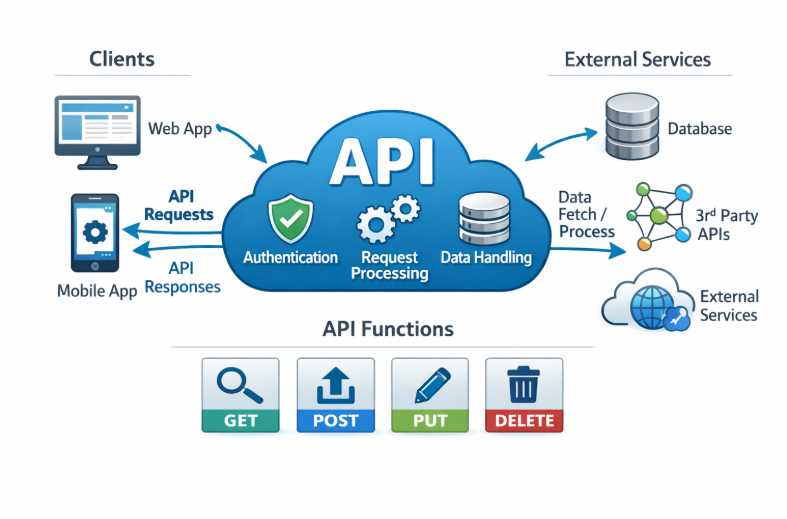 software development Software Engineering Diploma in Thika: Learn Databases, APIs, Security and Cloud Deployment
 software development Software Engineering Diploma in Thika: Advanced Web Development and Full-Stack Skills
You might also like
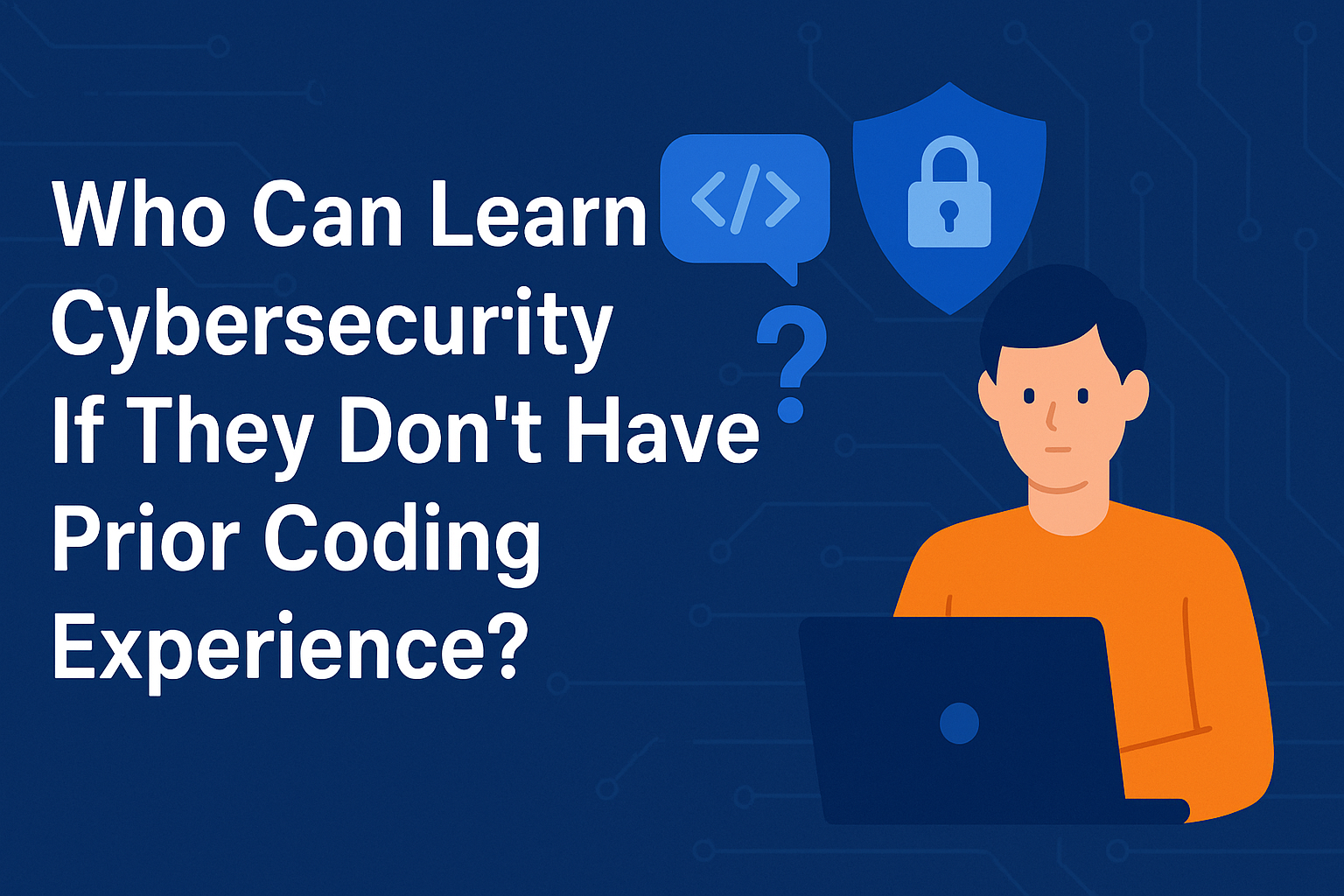 security Can You Study Can You Study Cybersecurity Without Prior IT Experience?
Nov 23, 2026
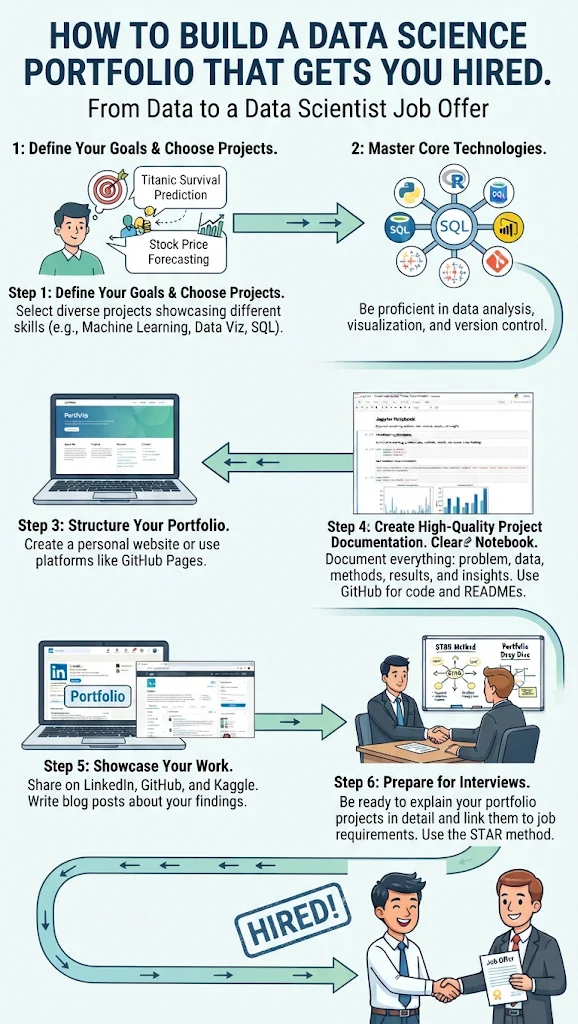 data How to Build a Data Science Portfolio That Gets You Hired in Kenya
Nov 23, 2026
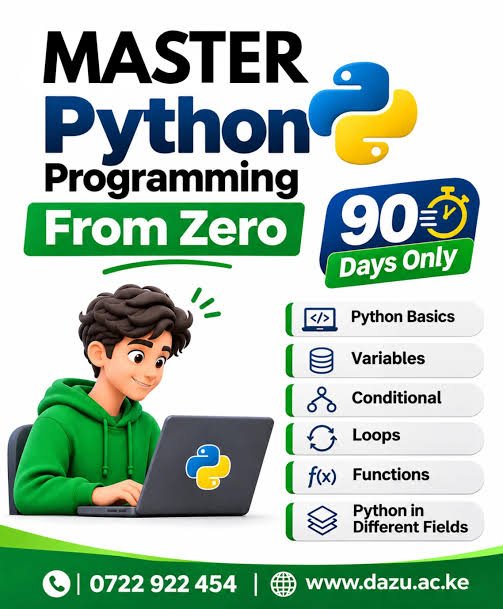 programming/ coding Python Course in Nairobi: Master Practical Coding Skills in Kenya.
Nov 23, 2026
 AI tech Virtual Assistant Course in Kenya: Learn Remote Work & Earn Online
Nov 23, 2026
 AI tech AI Automation Course in Kenya: Build Smarter Workflows
Nov 23, 2026
 security What is Cybersecurity? A Complete Guide for Beginners
Nov 16, 2026