
Discover FastAPI in Python, learn API development, request validation, asynchronous programming and how to build modern backend applications — explained simply, with real examples.
https://www.tiktok.com/@junaid.dev/video/7611890123742924052?is_from_webapp=1&sender_device=pc
Introduction
Open the app store on your phone and pick almost any app — a food delivery service, a banking app, a ride-hailing app. None of them store their data on your actual phone. Every time you scroll a menu, check a balance, or request a ride, your phone is quietly sending a request to a server somewhere and getting data back in return.
That communication layer — the thing actually receiving the request, processing it, and sending back a response — is an API. And increasingly, the Python framework powering that layer is FastAPI.
Imagine building a backend for a mobile application that needs to retrieve thousands of product records, register customers, and process business transactions. You need a framework that makes API development structured, efficient, and easy to maintain. FastAPI is a modern Python framework designed specifically for this job. It’s popular for its support for type hints, automatic API documentation, and asynchronous programming — and for young developers interested in backend engineering, it’s quickly become one of the most important frameworks to learn.
What Is FastAPI?
FastAPI is a Python web framework used to build APIs.
It provides:
- Request and response handling
- Data validation
- Automatic API documentation
- Type-hint-based development
- Dependency injection
- Support for asynchronous endpoints
- Integration with authentication systems
Why Use FastAPI?
1. Automatic Documentation
FastAPI generates interactive API documentation using OpenAPI specifications — meaning you (and anyone building a frontend or mobile app on top of your API) get a working, clickable reference of every endpoint, automatically, without writing it by hand.
2. Data Validation
It uses Pydantic models to validate incoming information, so if a request is missing a required field or sends the wrong type of data, FastAPI rejects it automatically with a clear error — before it ever reaches your actual application logic.
3. Asynchronous Support
It supports async and await for appropriate I/O-bound operations, allowing your application to handle other work while waiting on things like database queries or external API calls, rather than sitting idle.
4. Python Type Hints
Type hints help developers write clearer and more maintainable code — and in FastAPI specifically, they do double duty, since the same type hints that make your code easier to read are also what power the automatic validation and documentation.
5. API Development
It is particularly suitable for building backend APIs consumed by web and mobile applications, which is exactly the shape of most modern software — one backend, multiple frontends (a website, an Android app, an iOS app) all talking to it.
Practical Example: Building Your First FastAPI Endpoint
Install FastAPI and an ASGI server:
pip install fastapi uvicornCreate a file named main.py.
from fastapi import FastAPI

app = FastAPI()

@app.get("/")
def home():
    return {"message": "Welcome to Python API Development"}
Run the application:
uvicorn main:app --reloadOpen the local application address in your browser.
FastAPI also provides interactive documentation at:
/docsVisiting that /docs page for the first time is a genuinely satisfying moment for most beginners — a few lines of Python, and you already have a working, documented API endpoint you can test directly in the browser.
Practical Example: Student Registration API
Suppose you are developing an API for a training institution.
You can define a Pydantic model:
from fastapi import FastAPI
from pydantic import BaseModel, EmailStr

app = FastAPI()

class Student(BaseModel):
    full_name: str
    email: EmailStr
    course: str

@app.post("/students/")
def register_student(student: Student):
    return {
        "message": "Student received",
        "student": student
    }
This endpoint validates the incoming data structure and email format before processing it. Try sending an invalid email to this endpoint, and FastAPI will reject it automatically — you didn’t have to write a single line of validation logic yourself; declaring the type was enough.
For a real application, you would also add database persistence, authentication, authorization, and error handling.
FastAPI and Asynchronous Programming
Some applications need to wait for external services, database operations, or other network requests.
FastAPI supports asynchronous endpoint functions.
@app.get("/courses/")
async def get_courses():
    return [
        {"id": 1, "name": "Python"},
        {"id": 2, "name": "Cybersecurity"}
    ]
The async keyword allows asynchronous operations to be used inside the endpoint when the underlying libraries support them.
Using async does not automatically make every operation faster. It is most useful for suitable I/O-bound workloads — operations where your code is mostly waiting (for a database, an external API, a file), rather than computing. Beginners sometimes assume adding async everywhere is automatically good practice; understanding when it actually helps — and when it doesn’t — is a more advanced but genuinely important skill.
What Should You Learn in FastAPI?
- HTTP methods and REST API principles
- FastAPI project structure
- Pydantic data validation
- Request parameters and response models
- Database integration
- Authentication and authorization
- Asynchronous programming
- Testing and deployment
This progression matters — jumping straight into async programming or authentication before understanding basic request/response handling tends to create confusion that could easily be avoided by learning these in order.
Practical Projects for Students
- Course management API
- Student registration backend
- Inventory management API
- Appointment booking API
- Mobile application backend
- AI-powered application API
Django vs FastAPI
| Feature | Django | FastAPI |
|---|---|---|
| Main strength | Full web application framework | API development |
| Admin interface | Built in | Not built in by default |
| ORM | Django ORM | Often SQLAlchemy or another library |
| API documentation | Commonly added with tools such as DRF schema generators | Automatic OpenAPI documentation |
| Async support | Supported | Strong focus on asynchronous APIs |
Both are valuable. The right choice depends on the project requirements — a full business platform with an admin panel and lots of built-in structure often favors Django, while a lean, high-performance API serving a mobile app or a separate frontend often favors FastAPI. Many developers end up comfortable with both, choosing based on the project in front of them rather than loyalty to one tool.
Learn FastAPI at DAZU Training Institute
DAZU Training Institute encourages learners to develop practical software development skills — and FastAPI is taught the way it’s actually used in the field: building real APIs that connect to real frontends and mobile apps, not isolated exercises disconnected from a bigger picture.
FastAPI is a useful framework for students who want to build APIs that connect websites, mobile applications, and business systems. For example, a student at DAZU could develop a FastAPI backend for an e-commerce application and connect it to a React frontend or Flutter mobile application — giving them hands-on experience with exactly the kind of multi-part system many real Kenyan businesses are building right now.
If concepts like Pydantic validation, async functions, or dependency injection still sound unfamiliar after reading this, that’s completely normal at this stage — FastAPI has a genuinely gentle learning curve once you’ve written a few endpoints yourself and seen the automatic documentation and validation working in practice. At DAZU, learners build real, connected projects step by step, with instructors on hand to explain not just how to write the code, but why FastAPI is structured the way it is — so you come away understanding the framework, not just copying patterns from a tutorial.
Explore courses: https://dazu.ac.ke/courses
Contact: +254 722 922 454
Frequently Asked Questions
1. Is FastAPI good for beginners?
Yes, particularly after learning Python functions, type hints, and basic HTTP concepts.
2. Can FastAPI connect to MySQL?
Yes. It can connect to MySQL using suitable database libraries and ORMs.
3. Does FastAPI support authentication?
Yes. It supports security utilities and integrates with authentication mechanisms such as OAuth2 and bearer tokens.
4. Can FastAPI be used for mobile applications?
Yes. Mobile applications can communicate with FastAPI through HTTP APIs.
5. Is FastAPI better than Django?
Neither is universally better. Django offers a broader built-in application toolkit, while FastAPI focuses on API development.
6. Do I need to understand asynchronous programming before learning FastAPI?
No. You can write perfectly functional FastAPI endpoints using regular, synchronous functions while you’re learning the basics — async becomes relevant once you’re ready to optimize for specific, I/O-heavy workloads.
Conclusion
FastAPI provides Python developers with a modern approach to building APIs.
If you want to develop backend systems for websites, mobile applications, and connected software platforms, learning FastAPI is a valuable step — and one that becomes far more approachable once you’ve built your first working endpoint and seen the automatic documentation come to life.
Develop modern Python backend applications with DAZU Training Institute — beginner-friendly, hands-on, and built around real projects.
Visit: https://dazu.ac.ke/courses
Contact: +254 722 922 454
Related articles
 programming/ coding SQLAlchemy and Django ORM: Learn Python Database Management Without Writing Every SQL Query
 programming/ coding Authentication and Authorization in Python: Secure User Access in Backend Applications
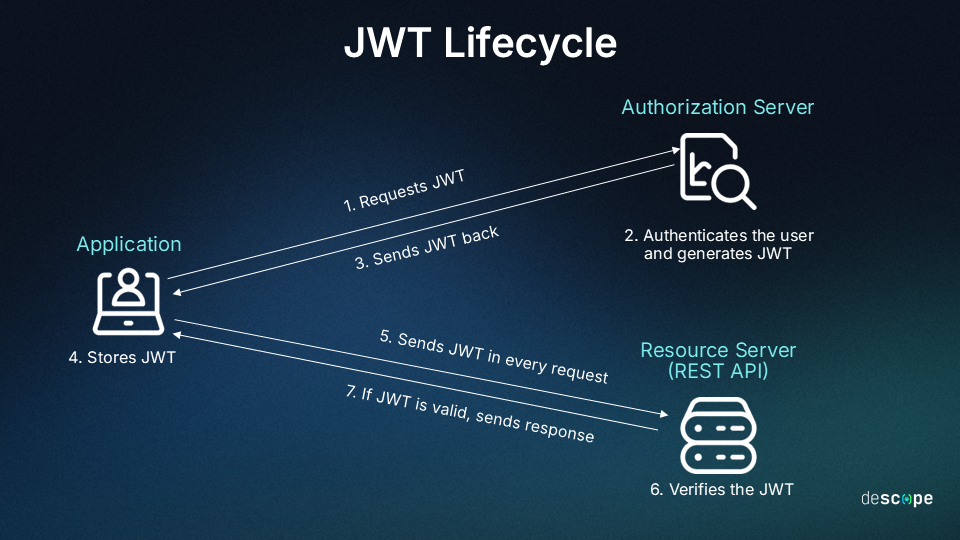 programming/ coding JWT and OAuth2 in Python: Learn Modern API Authentication and Token Security
 programming/ coding Python API Security: How to Protect Backend Applications from Cyber Threats
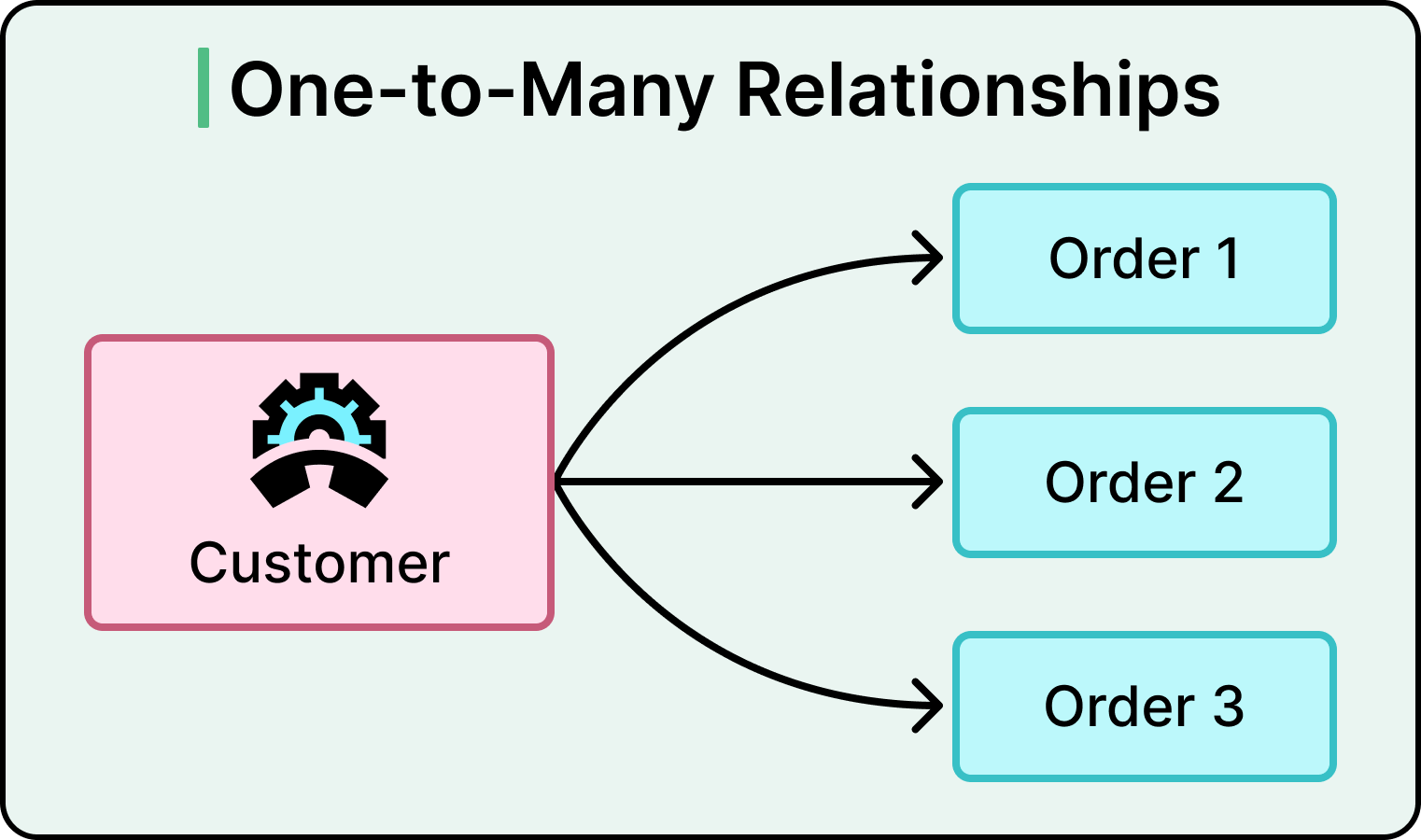 programming/ coding Database Relationships in Python: Learn One-to-One, One-to-Many and Many-to-Many Relationships
 programming/ coding Python Application Deployment: Learn How to Launch Django and FastAPI Projects Online
 programming/ coding Python Programming Course in Kenya: Learn Functions, Data Structures and Practical Problem-Solving
 programming/ coding Python Programming Course in Kenya: Build Real-World Projects with APIs, Databases and Automation
You might also like
 security What is Cybersecurity? A Complete Guide for Beginners
Nov 16, 2026
 software development Software Engineering Course in Thika: Build Real Skills, Real Projects, Real Career Opportunities
Nov 13, 2026
 beauty el Nails, Acrylic Nails and Nail Art: Which Skills Should You Learn?
Nov 13, 2026
 beauty Beauty Skills You Can Learn and Turn Into a Profitable Business in Kenya
Nov 13, 2026
 beauty Manicure and Pedicure Course in Kenya: Everything You Need to Know
Nov 13, 2026
 beauty : How to Become a Professional Nail Technician in Kenya
Nov 13, 2026