
Discover why learning cyber security in 2027 is crucial. Master Python, networking, identity defense, and fraud prevention to build a high-demand tech career.
Why Learn Cyber Security in 2027: A Complete Guide
The global digital ecosystem in 2027 has reached unprecedented complexity. As enterprise operations, financial platforms, and critical infrastructures migrate deeper into hyper-connected environments, the surface area for cyber threats has expanded exponentially. Artificial intelligence tools have accelerated both defense capabilities and threat sophistication, making data integrity, privacy, and infrastructure resiliency top business priorities across the globe.
Whether you are looking to pivot your career, upskill as an IT professional, or launch your tech journey from emerging technology capitals, the imperative to build security expertise has never been stronger. Understanding why to learn cyber security in 2027 requires examining how modern threat landscapes work and identifying the core technical competencies needed to protect digital assets.
The Evolving Threat Landscape in 2027
Cybersecurity is no longer an isolated technical function tucked away in server rooms; it is a fundamental business engine. In 2027, several structural shifts define the industry:
- AI-Driven Cyber Attacks: Cybercriminals leverage automated large language models and machine learning algorithms to execute hyper-personalized phishing campaigns, generate polymorphic malware, and automatically probe software vulnerabilities in real time.
- Identity-Centric Exploits: Traditional perimeter security has vanished. As distributed workforces and multi-cloud architectures dominate, attackers target identity management flows, stolen tokens, and API credential exposures rather than classic firewall barriers.
- Advanced Financial Fraud: With digital wallets, instant cross-border payments, and decentralized financial tools integrated into daily life, online fraud tactics have evolved into sophisticated multi-vector attacks targeting both consumer accounts and backend financial networks.
To protect against these modern vectors, organizations require skilled engineers capable of combining technical execution with proactive threat modeling.
Core Technical Pillars to Become a Cyber Security Expert
To become a cyber security expert in 2027, you must go beyond basic security concepts and develop deep, operational expertise across key domain pillars.
       +-------------------------------------------------------+
       |           2027 Modern Cyber Security Stack             |
       +-------------------------------------------------------+
       |  Networking Fundamentals | Python Automation & Tools  |
       |  Identity & Access (IAM)  | Fraud Detection & Defense  |
       +-------------------------------------------------------+
1. Networking and Infrastructure Security
A deep understanding of fundamental networking protocols remains non-negotiable. You cannot secure what you cannot visualize or trace.
- Packet Analysis & Protocols: Mastery of TCP/IP stacks, DNS, HTTP/S, SSH, and BGP routing protocols.
- Modern Network Architectures: Securing software-defined networking (SDN), micro-segmentation, zero-trust network access (ZTNA), and service meshes in cloud-native deployments.
- Traffic Monitoring: Analyzing packet captures using tools like Wireshark and network security monitoring (NSM) platforms to spot anomalies before breaches escalate.
2. Python Scripting and Security Automation
Manual security analysis cannot match the speed of modern automated threats. Securing modern infrastructure requires programmatic speed.
- Security Tooling in Python: Writing custom tools in Python for log analysis, web scraping threat intelligence feeds, automated port scanning, and API auditing.
- Automated Incident Response: Developing automated playbooks (SOAR) that flag suspicious events, revoke compromised tokens, and isolate infected endpoints instantly.
- Data Processing: Utilizing Python libraries (such as Pandas and NumPy) to analyze large volumes of Security Information and Event Management (SIEM) data.
3. Identity and Access Management (IAM)
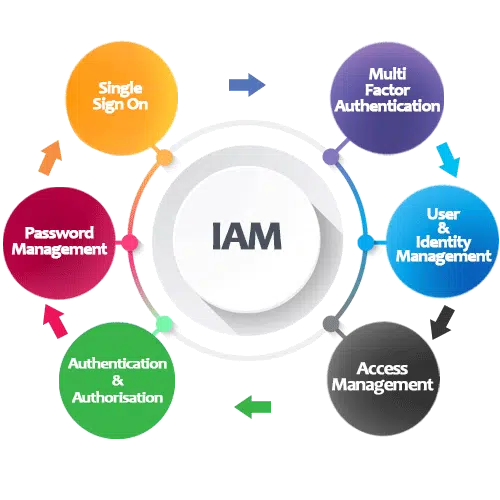
In a modern Zero-Trust architecture, identity is the new security perimeter. Protecting user identities and service credentials is central to modern defense strategies.
- Authentication & Authorization: Implementing robust OAuth 2.0, OpenID Connect (OIDC), SAML, and passwordless FIDO2 protocols.
- Privileged Access Management (PAM): Managing granular permissions, just-in-time access, and automated credential rotation across multi-cloud infrastructure.
- Mitigating Identity Theft: Defending against session hijacking, credential stuffing, and SIM-swapping exploits.
4. Fraud Prevention and Financial Defense
As digital transaction volumes skyrocket, security teams work closely with risk management to fight sophisticated financial fraud.
- Behavioral Analytics: Identifying account takeover (ATO) attempts by analyzing user behavior patterns, device fingerprinting, and geolocation anomalies.
- Synthetic Identity Fraud: Detecting fake accounts created using combined real and fabricated data.
- Transaction Monitoring Systems: Designing real-time rules and automated risk engines that flag suspicious transaction spikes or micro-charge testing.
Why Learn Cyber Security in Nairobi and Emerging Markets
Emerging technology hubs across the globe are experiencing an unprecedented surge in demand for cybersecurity talent. Specifically, decision-makers and technology leaders actively seek skilled specialists to learn cyber security in Nairobi, a city established as Silicon Savannah and East Africa's undisputed digital finance capital.
| Regional Market Driver | Impact on Cybersecurity Talent Demand |
| Fintech & Mobile Money Expansion | Platforms processing millions of daily transactions demand robust anti-fraud and encryption engineering. |
| Cloud Adoption Across Enterprises | Banks, NGOs, government agencies, and startups are migrating to the cloud, requiring cloud security specialists. |
| Data Protection Regulations | Strict enforcement of data protection laws mandates structured data privacy compliance and audit readiness. |
| Remote Global Opportunities | International security operations centers (SOCs) hire qualified African cybersecurity talent for global remote security teams. |
Learning cybersecurity within a rapidly scaling market gives you practical exposure to real-world challenges—such as mobile money fraud defense and identity management across massive population scales—making your skill set globally competitive.
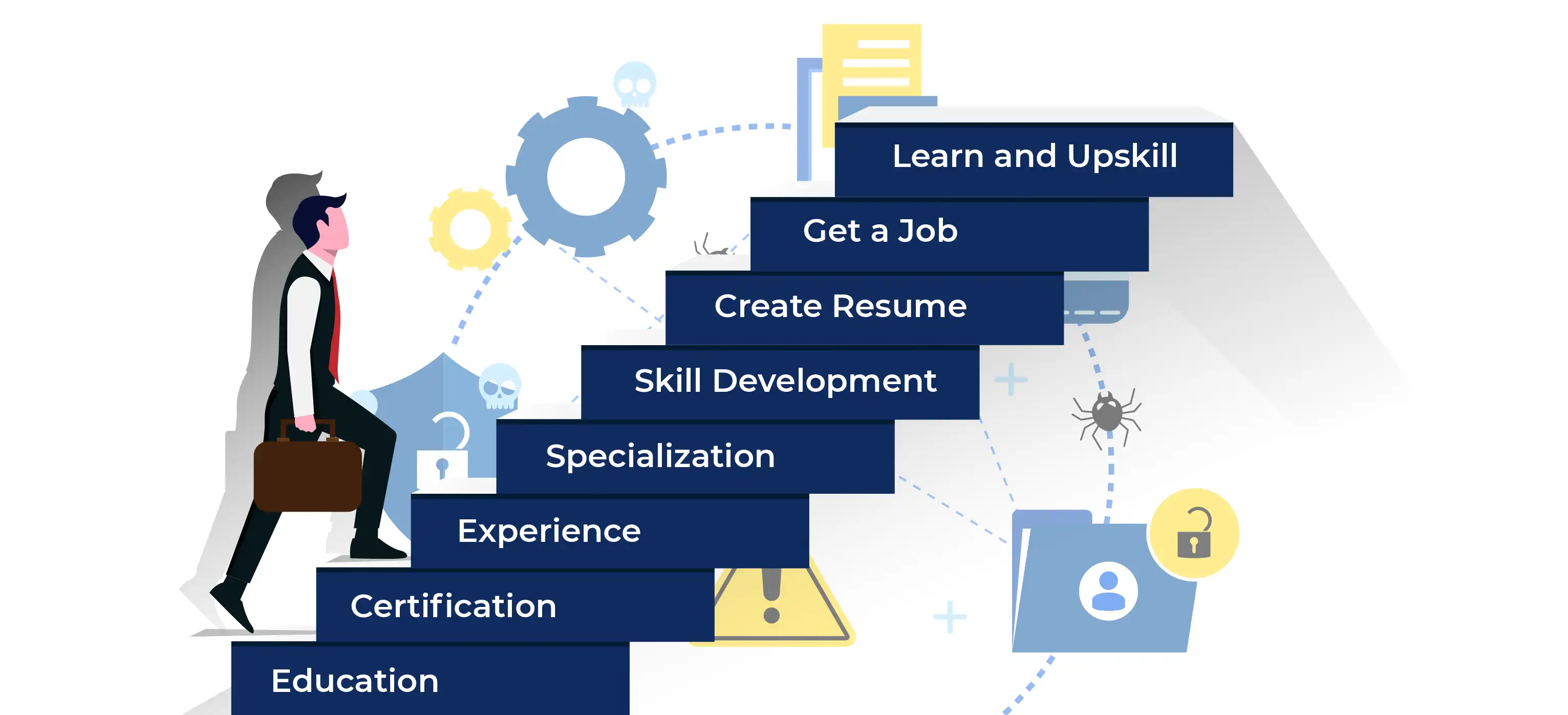
Step-by-Step Roadmap to Build Your Cybersecurity Career
Achieving mastery requires structured, practical learning rather than abstract theory. Here is a proven, execution-focused path:
[Phase 1: Foundations]   --->   [Phase 2: Automation]   --->   [Phase 3: Deep Defense]
- Networking & OS               - Python for Security           - Identity Systems (IAM)
- TCP/IP & Architecture         - Scripting & API Audits        - Fraud & Threat Intelligence
Phase 1: Master Technical Foundations
Start by building an unshakeable understanding of Linux administration, operating system internals, and networking fundamentals. Understand how data moves across networks and how servers communicate across subnets.
Phase 2: Learn Automation with Python
Move beyond point-and-click tools. Learn to write clean Python scripts to parse security logs, automate vulnerability scans, interact with REST APIs, and build automated defensive workflows.
Phase 3: Focus on Identity, Cloud, and Fraud Defense
Specialize in modern high-demand operational areas:
- Build Zero Trust identity workflows.
- Audit enterprise IAM policies for privilege escalation risks.
- Learn real-time online fraud detection mechanisms and transaction flow security.
Phase 4: Practical Cohorts and Real-World Application
Theoretical knowledge alone will not pass technical interview evaluations or defend live networks. Seek out cohort-based training programs, interactive labs, and practical workshops that focus on real-world execution. Engaging in hands-on building, practical exercises, and peer feedback ensures concepts stick and translates directly into job readiness.
Key Skills & Tooling Summary Matrix
To stand out to potential recruiters or enterprise security teams in 2027, build practical proficiency in the following toolsets:
- Programming & Automation: Python, Bash, Git.
- Network Security & Analysis: Wireshark, Nmap, Zeek, Burp Suite.
- Identity & Cloud Platforms: AWS IAM, Azure Active Directory / Entra ID, Okta, HashiCorp Vault.
- SIEM & Monitoring: Splunk, Elastic Security, Microsoft Sentinel.
- Fraud & Risk Defense: Device Fingerprinting API integrations, Behavioral Analytics Platforms, SQL log queries.
Conclusion: Take Action on Your Cybersecurity Future
The security landscape of 2027 demands practical executioners—professionals who understand deep networking principles, code defensively in Python, secure complex identity systems, and stop digital fraud before it damages businesses.
Whether your target is defending regional fintech platforms or providing remote security consultancy to global firms, the opportunities have never been greater. Transitioning into this high-impact career starts with taking practical steps: build your lab, write your first security scripts, master core networking layers, and commit to continuous hands-on learning.
Related articles
 security What is Cybersecurity? A Complete Guide for Beginners
 security . Ethical Hacking vs Cybersecurity: Which Career Should You Choose in Kenya?
 security How to Start a Career in Cybersecurity in Kenya: A Beginner's Guide
 security Python Programming and Automation in Nairobi: Learn Coding for Cybersecurity and Technology
 security Computer Systems and Networking Course in Nairobi: Learn the Technology Behind the Internet
 security Cybersecurity Training in Nairobi: Start Your Journey Towards a Career in Cybersecurity
 security The Future of Cybersecurity in Kenya: AI, Cloud Security and Threat Detection
 security Why Choose Dazu School of Tech for Cybersecurity Training in Nairobi?
You might also like
 software development Software Engineering Course in Thika: Build Real Skills, Real Projects, Real Career Opportunities
Nov 13, 2026
 beauty el Nails, Acrylic Nails and Nail Art: Which Skills Should You Learn?
Nov 13, 2026
 beauty Beauty Skills You Can Learn and Turn Into a Profitable Business in Kenya
Nov 13, 2026
 beauty Manicure and Pedicure Course in Kenya: Everything You Need to Know
Nov 13, 2026
 beauty : How to Become a Professional Nail Technician in Kenya
Nov 13, 2026
 caregiver How Caregiving Can Open Doors to International Employment Opportunitie
Nov 12, 2026