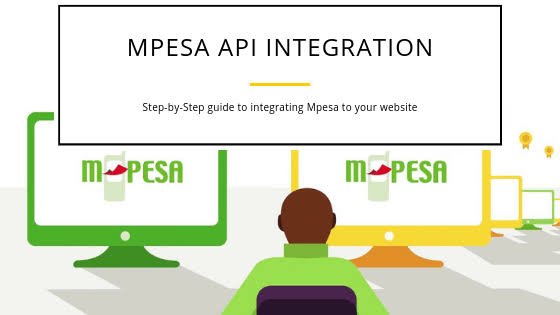
For businesses operating in Kenya, a website isn't complete without a fast, reliable way to accept payments. Here's why M-Pesa integration is a practical, in-demand skill for developers to master.
M-Pesa integration allows developers to connect websites and web applications to mobile payment services, enabling customers to make payments conveniently and securely online. For businesses operating in Kenya, integrating M-Pesa can simplify transactions, automate payment confirmation, and improve the overall customer experience. Developers can use APIs to connect a website to M-Pesa services and build features such as payment requests, transaction processing, and automated payment verification. Learning M-Pesa integration is therefore a valuable practical skill for developers who want to build real-world e-commerce platforms, booking systems, subscription services, and other applications that require reliable digital payments.
Why M-Pesa Integration Matters in the Kenyan Market
M-Pesa is the dominant payment method for most Kenyan consumers, which means any web application targeting this market needs a smooth way to accept it. A website that only supports card payments or manual bank transfers creates friction for the majority of local customers, making M-Pesa integration less of an optional feature and more of a baseline requirement for serious e-commerce or booking platforms in Kenya.
How M-Pesa API Integration Actually Works
Integrating M-Pesa typically involves connecting a web application to Safaricom's Daraja API, which provides the tools developers need to send payment requests, receive transaction confirmations, and verify payment status programmatically. Understanding this API including authentication, request formatting, and handling callback responses is the core technical skill behind building a working integration.
Payment Requests: Prompting Customers to Pay Instantly
One of the most common features developers build is the STK Push, which sends a payment prompt directly to a customer's phone during checkout. The customer simply enters their PIN to approve the payment, without needing to manually navigate to their M-Pesa menu. Learning to implement this smoothly is a core part of building a modern, frictionless checkout experience.
Automated Payment Verification, Not Manual Checking
Without integration, confirming a payment often means manually checking for an M-Pesa message and matching it to an order slow and error-prone as order volume grows. A proper integration listens for automatic callback confirmations from the API, allowing a system to verify payment and update an order's status instantly, without anyone needing to check anything by hand.
Transaction Processing and Recordkeeping
Beyond just confirming that a payment happened, well-built integrations log transaction details directly into a business's own systems linking each payment to a specific order, customer, or invoice. This creates a reliable, searchable record of transactions, which is far more dependable than trying to reconcile M-Pesa messages against sales records manually.
Where This Skill Applies in Real Applications
M-Pesa integration is directly useful across several types of applications developers commonly build: e-commerce platforms that need to process customer payments, booking systems that require deposits or full payment to confirm a reservation, and subscription services that need to charge customers on a recurring basis. Understanding the integration once means you can apply it across many different types of projects.
What Developers Should Understand Before Building It
A solid M-Pesa integration requires more than just calling an API endpoint developers need to understand how to securely handle API credentials, test properly in Safaricom's sandbox environment before going live, and build reliable error handling for cases like failed or delayed transactions. Skipping these considerations often leads to integrations that work in testing but fail in real, unpredictable, real-world conditions.
Why This Is a Genuinely Marketable Developer Skill
Because so many Kenyan businesses need this exact functionality, developers who can implement M-Pesa integration confidently have a clear, practical skill they can point to directly when working with local clients or employers it's specific, in demand, and directly tied to a business's ability to actually collect revenue online.
M-Pesa integration is one of the most practical, locally relevant skills a developer working in Kenya can build turning a general understanding of APIs into a feature businesses genuinely need. Mastering it prepares you to build real e-commerce platforms, booking systems, and subscription services that businesses can actually rely on.
Related articles
 security What is Cybersecurity? A Complete Guide for Beginners
 software development Software Engineering Course in Thika: Build Real Skills, Real Projects, Real Career Opportunities
 beauty el Nails, Acrylic Nails and Nail Art: Which Skills Should You Learn?
 beauty Beauty Skills You Can Learn and Turn Into a Profitable Business in Kenya
 beauty Manicure and Pedicure Course in Kenya: Everything You Need to Know
 beauty : How to Become a Professional Nail Technician in Kenya
 caregiver How Caregiving Can Open Doors to International Employment Opportunitie
 caregiver Is Caregiving a Good Career? Salary, Opportunities and Career Growth in Kenya
You might also like
 caregiver 5 Reasons Why Young People Should Consider a Career in Caregiving
Nov 12, 2026
 caregiver How to Become a Professional Caregiver in Kenya: A Complete Beginner’s Guide
Nov 12, 2026
 caregiver How to Become a Professional Caregiver in Kenya: Training, Skills and Career Opportunities
Nov 11, 2026
 beauty Beauty therapy course Kenya, beauty training Nairobi, beauty and cosmetology course
Nov 11, 2026
 data . How to Become a Data Scientist in Kenya: Skills, Courses and Career Paths
Nov 11, 2026
 security . Ethical Hacking vs Cybersecurity: Which Career Should You Choose in Kenya?
Nov 11, 2026