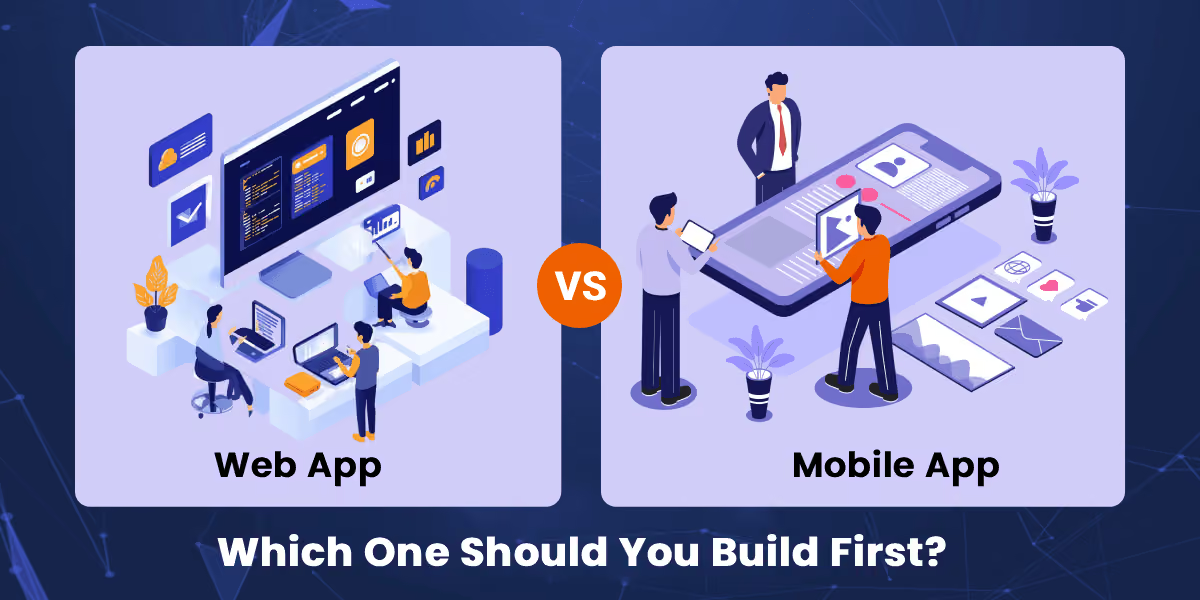
Both fields build digital products people use daily, but they require different tools, skills, and ways of thinking. Here's a clear comparison of web development and mobile app development, and how to choose between them.
Web development and mobile app development are often mentioned together, and it's easy to assume they're basically the same skill applied to different screens. In reality, they involve different tools, different technical considerations, and different ways of thinking about how users interact with a product. Understanding these differences matters if you're deciding which path to pursue, or simply trying to understand how modern digital products actually get built.
What Web Development Actually Involves
Web development focuses on building websites and web applications that run inside a browser accessible from any device with an internet connection, without needing to be installed. Developers typically work with HTML, CSS, and JavaScript on the frontend, often using frameworks like React, alongside backend technologies such as Python, Django, or Node.js to handle logic, databases, and server-side functionality.
What Mobile App Development Actually Involves
Mobile app development focuses on building applications specifically designed to run on smartphones and tablets, typically downloaded and installed through an app store. Developers may build natively for a specific platform using Swift or Kotlin, for example or use cross-platform frameworks like Flutter or React Native, which allow a single codebase to run on both iOS and Android with some shared code.
Access and Installation: A Core Practical Difference
One of the most immediate differences is how users access the product. A website is available instantly through a link, with no installation required useful for content that needs to reach people quickly or occasionally. A mobile app requires downloading and installing from an app store, which creates more friction upfront, but often results in a more integrated, ongoing relationship with users who've chosen to keep the app on their device.
Performance and Device Capabilities
Mobile apps generally have deeper access to a device's hardware and features camera, GPS, push notifications, offline storage allowing for a more capable, responsive experience in certain use cases. Web applications have improved significantly in this area through modern browser capabilities, but native mobile apps still typically offer smoother performance for graphics-intensive or highly interactive applications.
Development Complexity and Platform Considerations
Web development generally involves building once and having it work across most devices and browsers, though responsive design is needed to handle different screen sizes well. Mobile development, particularly when building natively, often means developing separately for iOS and Android though cross-platform frameworks have reduced this duplication significantly, letting developers maintain one codebase for both platforms in many cases.
Discoverability: Search Engines vs. App Stores
Websites can be found through search engines, giving them a direct path to new users actively searching for relevant content or services. Mobile apps rely more heavily on app store visibility, word of mouth, or existing marketing channels to drive downloads, since they aren't typically discoverable the same way a webpage is through a Google search.
Update and Maintenance Differences
Updating a website is usually immediate changes go live as soon as they're deployed, with no action required from users. Mobile apps often require users to manually update through an app store, meaning some portion of your user base may be using an outdated version at any given time, which developers need to account for when planning changes.
Which Businesses Typically Need Which
A website is often the right starting point for most businesses a way to establish an online presence, share information, and enable basic transactions. Mobile apps make more sense for businesses that benefit from ongoing engagement, offline functionality, or deeper device integration think ride-hailing apps, banking apps, or services people use frequently and want quick, direct access to from their home screen.
Skills That Carry Over Between the Two
Despite their differences, both fields share underlying concepts working with APIs, managing data, understanding user experience principles, and structuring code cleanly. A developer who understands one often finds the other more approachable to learn, since core programming logic and problem-solving skills transfer, even if the specific tools and constraints differ.
Choosing Which Path Fits You
If you enjoy building things that reach the widest possible audience quickly, with less concern about app store approval processes, web development may be the more natural starting point. If you're drawn to building more immersive, device-integrated experiences and don't mind the additional complexity of app store distribution and platform-specific considerations, mobile development may be a better fit. Many developers eventually build skills in both, giving them flexibility to work on whichever type of project a business actually needs.
Building These Skills at Dazu
Whether your interest leans toward web development or mobile app development, Dazu's training programmes are built around real, practical projects building working websites and applications you can showcase to employers or clients by the end of the course. Come learn the skills to build the kind of digital products businesses and users actually rely on every day.
Related articles
 security What is Cybersecurity? A Complete Guide for Beginners
 software development Software Engineering Course in Thika: Build Real Skills, Real Projects, Real Career Opportunities
 beauty el Nails, Acrylic Nails and Nail Art: Which Skills Should You Learn?
 beauty Beauty Skills You Can Learn and Turn Into a Profitable Business in Kenya
 beauty Manicure and Pedicure Course in Kenya: Everything You Need to Know
 beauty : How to Become a Professional Nail Technician in Kenya
 caregiver How Caregiving Can Open Doors to International Employment Opportunitie
 caregiver Is Caregiving a Good Career? Salary, Opportunities and Career Growth in Kenya
You might also like
 caregiver 5 Reasons Why Young People Should Consider a Career in Caregiving
Nov 12, 2026
 caregiver How to Become a Professional Caregiver in Kenya: A Complete Beginner’s Guide
Nov 12, 2026
 caregiver How to Become a Professional Caregiver in Kenya: Training, Skills and Career Opportunities
Nov 11, 2026
 beauty Beauty therapy course Kenya, beauty training Nairobi, beauty and cosmetology course
Nov 11, 2026
 data . How to Become a Data Scientist in Kenya: Skills, Courses and Career Paths
Nov 11, 2026
 security . Ethical Hacking vs Cybersecurity: Which Career Should You Choose in Kenya?
Nov 11, 2026